Hosting standards
Welcoming international guests to Armenia
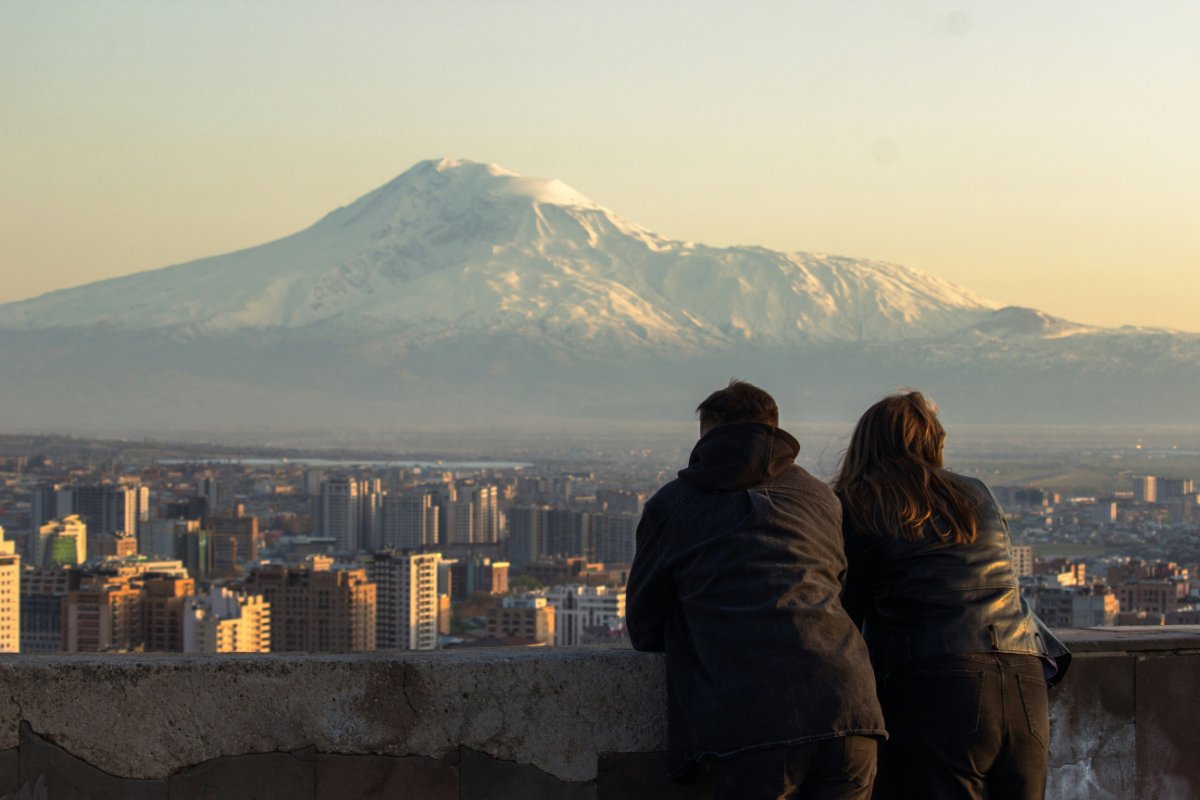
Once a guest has chosen you and paid a fair price, the next job is a welcome without friction. For many of your guests, that welcome happens in a country they don't know, in an alphabet they can't read and with a currency they've never held.
This guide covers the practical things that make a first day in Armenia easy: who your guests are, how to write for them, and what to tell them about arrival, money, getting online and your neighbourhood. Get these right and the stay starts calm, which is where good reviews begin.
The short answer
Know where your guests come from and write for them in clear, simple English, with a Russian version of the key information. Before they travel, explain the trip from the airport to your door, what payments you accept, and how to get online. Give your address in Armenian and Latin letters, with a map pin and a photo of the entrance. Send it all a few days before arrival, not after they land.
Who visits Armenia
The Statistical Committee of Armenia counted 2,263,642 international visitors in 2025. By citizenship, the ten largest groups were:
- Russia: 921,704
- Armenian citizens: 319,285
- Georgia: 288,578
- Iran: 182,364
- USA: 60,891
- China: 45,004
- France: 35,847
- Germany: 34,136
- India: 28,450
- Ukraine: 27,648
Russian citizens made up about four in ten visitors, which is why a Russian version of your key information is worth having. The rest come from many countries, so English stays your shared language. You can see the full figures, by year and by quarter, on the numbers page.
Write for guests who read English as a second language
Many of your guests will read your messages in their second or third language, or paste them into a translation tool. Plain writing survives both.
- Use short sentences. One instruction per line. "Turn left after the pharmacy" is easier than a paragraph of directions.
- Skip slang and idioms. Phrases like "a stone's throw" or "make yourself at home" can translate oddly. Say what you mean.
- Use numbers and photos. Floor, flat number, door colour, a photo of the entrance. Pictures need no translation.
- Add a Russian version of the key information. Address, entry steps, Wi-Fi, house rules and check-out time. Our suggestion: ask a fluent speaker to check it once, then reuse it.
- Expect translation tools on both sides. It's fine to use one yourself to read a guest's message. Reply simply, and check the meaning of anything important before you answer.
Arrival, seen from the guest's side
Picture your guest walking out of Zvartnots International Airport, perhaps late at night, with a phone that may not have data yet. What do they need to know at that moment?
The airport's own website lists buses to the Yerevan city centre, a taxi desk in the arrivals hall, and a public Wi-Fi network that covers the whole airport. That Wi-Fi matters: a guest without mobile data can still read your message and book a ride.
Pre-arranged transfer
- A driver waits for them, often with a name sign
- The price is agreed before they fly
- Best for late arrivals, families and heavy luggage
Taxi app or airport taxi
- Flexible, with no booking ahead
- The guest needs data or Wi-Fi to use an app
- Your exact address and map pin matter most
Whichever they choose, tell them how long the drive usually takes to your door, what the entrance looks like, and what to do if they can't reach you. If you help arrange a transfer, confirm the details in the booking platform's messages so there's a written record. The check-in guide covers the rest of the arrival step by step.
Money, Wi-Fi and getting connected
Armenia's currency is the Armenian dram (AMD). Guests pay for their booking through the platform, but they'll need to pay for taxis, shops and meals locally from the first hour.
- Tell guests what you accept for anything paid on site, and say it before they arrive.
- Mention a little cash in dram. The airport's website says some airport buses take cash in dram only.
- Share what you know locally. The nearest cash machine, and whether the shop downstairs takes cards.
For getting online:
- Wi-Fi first. Put the network name and password in your welcome message, and on a printed card by the router.
- Test the speed between guests, and add simple restart steps to the card.
- SIM cards. The airport's website says mobile operators have offices in the arrivals hall, and that you show a passport to sign up for a service. Tell guests to keep theirs handy.
Your address, in two alphabets
Armenian has its own alphabet, and many of your guests can't read it. Drivers and neighbours may prefer it. So give both.
- Write the address in Armenian letters for drivers and anyone the guest asks for directions.
- Write it in Latin letters, using the spelling that map apps recognise.
- Add a map pin dropped on the building entrance, not the street.
- Add the details a map misses. Building number, entrance, floor, flat, and a photo of the door.
- Add a Cyrillic version if many of your guests read Russian.
Local etiquette and neighbourhood tips
A few honest tips make guests feel looked after and help them fit in with the neighbours.
- Building life. Explain quiet hours, the shared stairwell and where the rubbish goes. Put these in your house rules too.
- Church visits. Our suggestion: mention that modest clothing is a respectful choice for churches and monasteries.
- Three local favourites. A bakery, a place to eat and the nearest pharmacy, from your own experience.
- Getting around. How you'd get to the centre from your door, and roughly how long it takes.
- Emergencies. Put 112 (police, fire and rescue) and 103 (ambulance) in your welcome information. The safety guide explains where these numbers come from.
Welcome mistakes to avoid
- Sending arrival details after the guest has already landed
- Long paragraphs full of idioms
- An address only in Armenian, or only in Latin letters
- Assuming guests have mobile data when they arrive
- Giving visa advice from memory
- Asking guests to pay for the booking outside the platform
Your checklist
Before arrival
- Arrival message sent two or three days ahead
- Address in Armenian and Latin letters, with a map pin
- Transfer and taxi options explained
In the welcome message
- Key information in English and Russian
- Wi-Fi name and password
- Payments you accept on site
In the home
- Printed Wi-Fi card by the router
- House rules in two languages
- Three neighbourhood tips
Questions hosts ask
Do I need to speak Russian to host international guests?
No. Clear, simple English works for most guests, and translation tools fill gaps. A checked Russian version of your key information helps, because Russian citizens were the largest group of visitors in 2025.
Should I tell guests about visa rules?
Point them to the Ministry of Foreign Affairs of Armenia instead of giving your own answer. The ministry says citizens of countries on its visa-free list can stay up to 180 days in a year, most others need a visa, and it offers an e-visa. Rules can change, so guests should check before they travel.
Can Revamp send arrival messages for me?
Yes. Customer Journey in the Revamp dashboard can send guest messages automatically at set moments, so your arrival details go out on time, every time.
What if a guest lands in the middle of the night?
Offer a pre-arranged transfer or a clear self check-in, and keep your phone on. If you host on Revamp, the Telegram bot's morning summary shows who arrives and leaves that day.