Pricing & revenue
Pricing your first season in Armenia
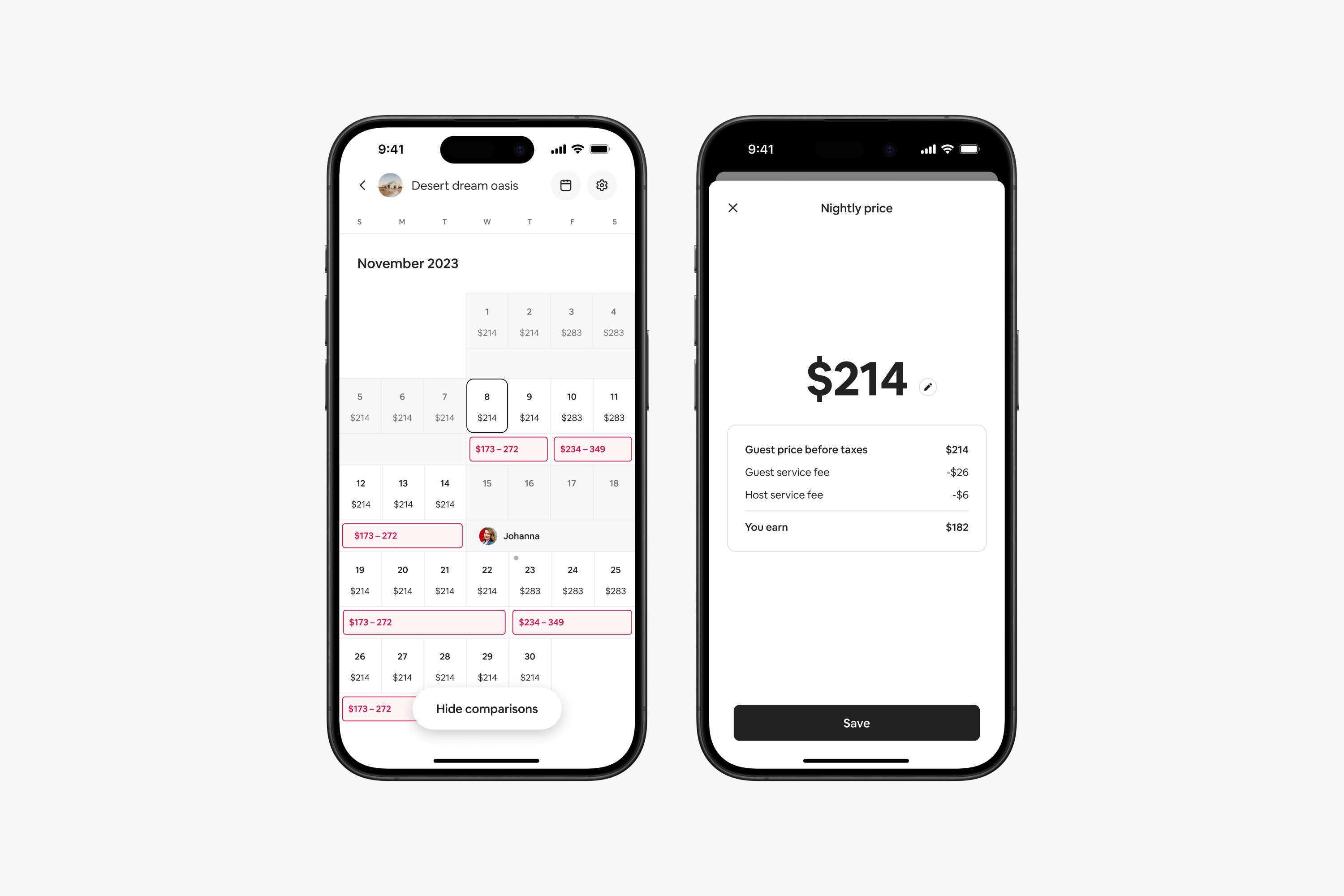
Good photos get you looked at. Your price decides whether the look becomes a booking, and whether that booking pays. This guide shows you how to set a first price you can defend, a floor you never go below, and a calendar that moves with Armenia's seasons and busy dates.
The short answer
Start from what similar places near you charge, not from what you hope to earn. Work out your floor: the lowest nightly price that still covers your costs. Then let the calendar move the price: higher in summer and on busy dates, lower in winter and in the short gaps between bookings. Check your numbers once a month and adjust.
Step 1: find your starting price
Your first price is a guess, so make it an informed one.
- Find 5 to 10 places like yours. Same area, same number of bedrooms and guests, a similar standard. Look on every site you plan to list on.
- Search real dates. Check a weekday and a weekend about a month ahead, and note the full price a guest would pay, cleaning fee included.
- Place yourself honestly. If your photos, reviews or location are stronger, price near the top of the group. If you're new with no reviews yet, start a little below the middle to win your first bookings.
- Write it down. Keep your list of comparables. You'll look at it again every season.
Step 2: know your floor
Your floor is the price below which a night costs you money. Never go under it, even to fill a gap.
What goes into it:
- Your fixed costs for the month: rent or mortgage, utilities, internet, software
- Your costs for each booked night: cleaning, laundry, supplies, spread over the nights of a stay
- The commission each platform keeps
The break-even calculator does this sum for you: type your fixed costs, price and commission, and it tells you how many nights a month you need to cover your costs. If the answer is more nights than you can realistically sell, your price or your costs need to change before the season starts.
Step 3: let the seasons move your price
Armenia's year is uneven, and your prices should be too. The Statistical Committee's official count shows the shape clearly: in 2025, 827,112 visitors came in July to September, more than twice the 386,741 who came in January to March. By month, the Tourism Committee counted 334,396 visitors in August 2025, the busiest month of the year, and 117,372 in February, the quietest.
What that means for your calendar (our suggestion, not a rule):
- Summer: your highest prices, and a longer minimum stay, because demand is strong.
- Spring and autumn: close to your starting price, with weekend premiums.
- Winter: your lowest prices, but never below your floor. Shorter minimum stays and weekly discounts help here.
You can see the latest month-by-month figures, with their sources, on Armenia in numbers.
Step 4: price the busy dates early
A big concert, festival, match or holiday weekend in Yerevan fills places fast, often weeks ahead. Hosts who leave their usual price on those dates sell out early and cheaply.
- Check what's coming. Busy dates lists the big events in Armenia, each with its source.
- Raise the price as soon as you know. Guests book these dates early, so a late change is too late.
- Set a minimum stay for the peak. Two or three nights stops one short booking blocking the whole weekend.
- Compare before you commit. The "Is a higher price worth it?" calculator shows how many nights the higher price needs to earn the same.
If you host on Revamp, Dashboard → Analytics → Events & pricing suggests prices for upcoming event dates.
Step 5: fill the gaps without giving the place away
Lead time: the days between booking and arrival. Guests often book further ahead for summer than for winter. A price change for next month still has time to work; a change for tomorrow mostly doesn't.
Orphan nights: one or two nights stuck between bookings, too short to sell under your minimum stay. Lower the minimum stay for just those dates, or offer a small discount on them.
Longer stays: Airbnb lets you set a weekly discount (7 nights or more) and a monthly one (28 nights or more). Longer stays mean fewer turnovers, so a modest discount often still earns you more.
Platform programmes: Booking.com's Genius programme gives Genius members a discount, and Airbnb's Smart Pricing can adjust your price automatically within limits you set. Both can help, but set a minimum price first, and make it at least your floor.
Pricing mistakes to avoid
- One price all year, so summer sells out cheap and winter sits empty
- A price below your floor, so every booking costs you money
- Copying the cheapest place nearby instead of the most similar one
- Forgetting the cleaning fee and commission when comparing prices
- Raising prices for busy dates a week before, when they've already sold
- Changing everything at once, so you can't tell what worked
Your checklist
Before you open your calendar
- 5 to 10 comparable places found and noted
- Floor worked out with the break-even calculator
- Starting price set within the range of comparables
Your calendar
- Summer, spring, autumn and winter prices set
- Busy dates checked and priced, with a minimum stay
- Weekly and monthly discounts decided
Every month
- Occupancy, ADR and RevPAR checked
- Next month's prices and gaps reviewed
- Comparables rechecked at the start of each season
Questions hosts ask
How often should I change my prices?
Look at your calendar once a week in busy months and once a month in quiet ones. Change a few dates at a time so you can see what works.
Should I start cheap to get my first reviews?
A little below the middle of your comparables is fine for your first few bookings. Never go below your floor, and raise the price once you have good reviews.
Should my price be the same on every site?
Some booking sites ask for rate parity in their contracts. Check yours. Remember each site keeps a different commission, so the same price can leave you a different amount.
What do ADR, occupancy and RevPAR mean?
They're the three numbers that show how a month really went. The host glossary explains each one, and the calculator works them out from your own numbers.
Does a higher price always earn more?
Not always. A higher price that sells fewer nights can earn less. Compare both before you decide, and judge by RevPAR, not by price alone.