Feature · Short-term rentals · 20 Nov 2026
Sleeping in the rock: five cliff and cave stays you can book now
By the Revamp community team · 14 min read
A new hotel half-buried in a Greek cliff, eight rooms cut into the coast of Japan, a village of caves around an old monastery in Cappadocia, Matera's cave rooms and a rock overhang deep in Wadi Rum. Five stays built into rock that are open and taking bookings, how each one was made, and one idea from each for your own place.
Feature: places and stories from Armenia picked by the Revamp community team, with the sources linked.
Some stays sit in front of a view. These sit inside the rock. We looked for places built into cliffs and caves that are open today, not drawings: each one below was taking bookings when we checked on 20 November 2026. For each you'll find how it was made, why the design works, what a stay is like, and one idea a host in Armenia can use.
Olen, Syros: a hotel half-buried in a Greek cliff
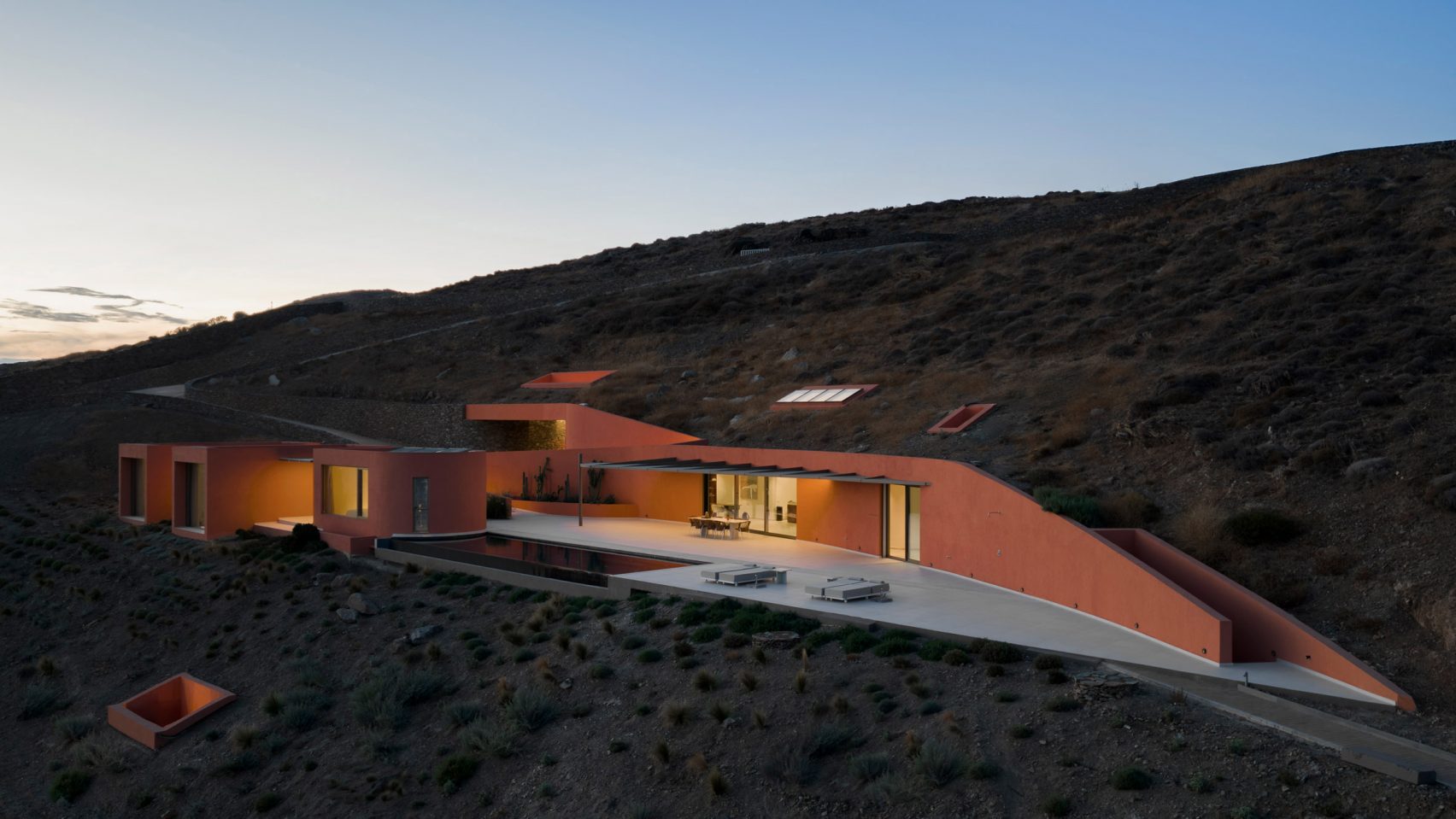
Photo: Yiorgis Yerolymbos, via Dezeen
Olen is a seven-suite hotel on Syros, in the Cyclades, designed by the Athens practice Ateno Architecture Studio. Instead of putting buildings on top of the cliff edge, the architects set the hotel into it: terraces, retaining walls and cuts in the ground, with some rooms underground and lit from skylights. Its founders, Elias Theodorakis and Yiorgos Fiorentinos, told Dezeen the site is remote, a place where the landscape still outweighs anything built, and the aim was to keep it that way even though the brief asked for a fairly large hotel.
The hotel steps down the slope in three parts joined by a zigzag path, each more private than the one above:
- At the top, The Plane: a curved retaining wall wraps a large terrace with a leaf-shaped pergola and a pool. Shared living rooms and a bedroom are sunk into the hill, and three more bedrooms sit in small blocks that reach out towards the sea.
- In the middle, The Line: two larger underground suites open onto a shared terrace with a long, narrow infinity pool.
- At the bottom, The Point: a separate underground guest house behind a curved stone wall, with its own small round pool.
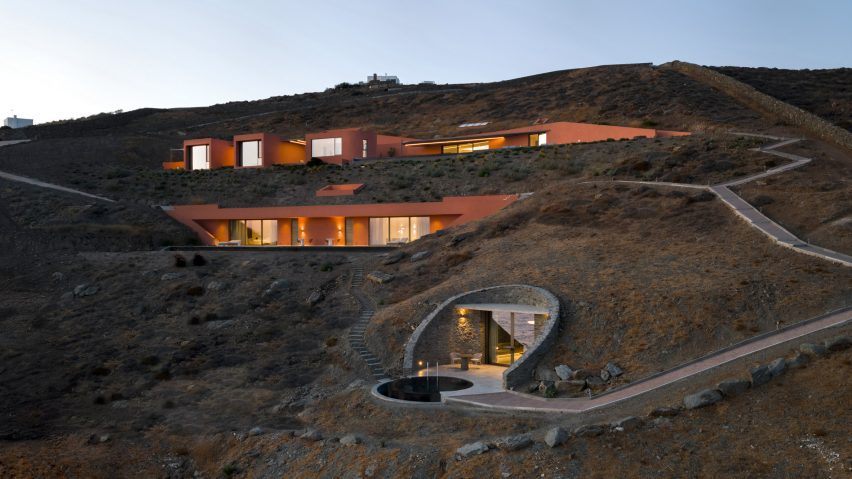
The three parts at dusk, with The Point's stone-faced cave at the front. Photo: Yiorgis Yerolymbos, via Dezeen
Why the design works
It's drawn as surfaces, not buildings. The architects describe Olen not as a set of objects but as an assembly of terrace floors, retaining walls and cuts in the terrain, so that the architecture reads "as embedded in the landscape itself". From the water you see a few earth-red walls stepping down the hill, not a hotel.
The curved walls do the work. The founders call the curved retaining walls of The Plane, together with its pergola, the most important moves in the project. The winding line of the walls leads guests around the site, gives the arrival a sense of theatre, and wraps the terrace so it feels sheltered while staying open to the horizon.
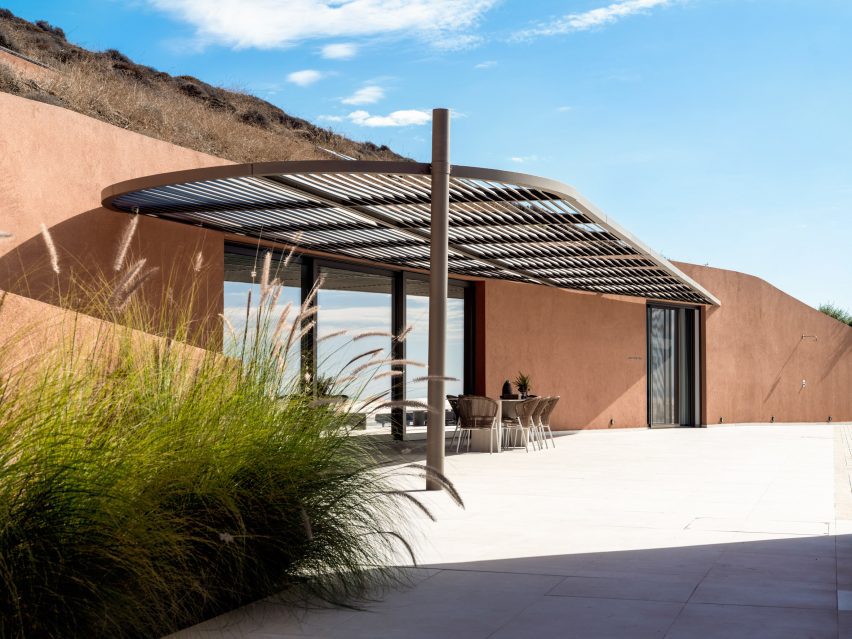
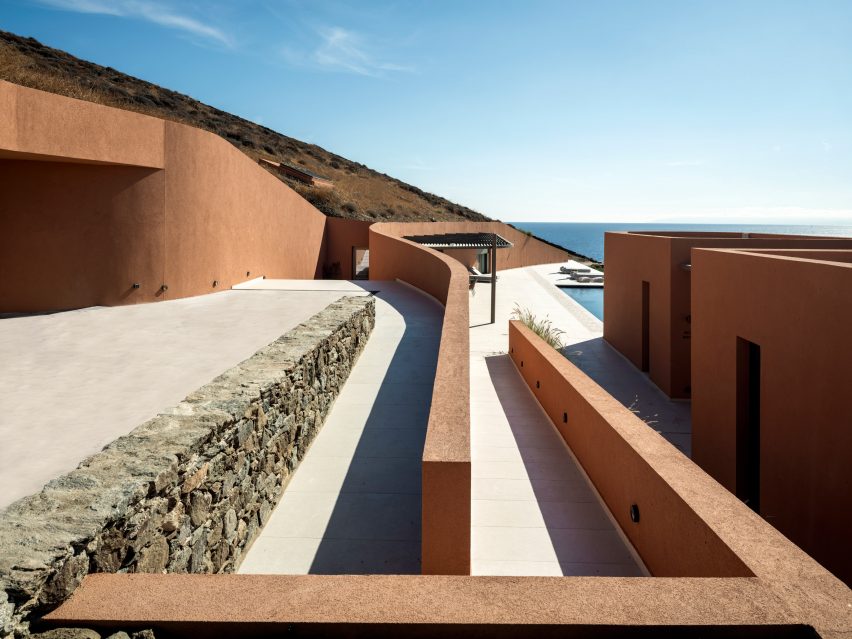
The pergola over the top terrace, and the path between the walls. Photos: Yiorgis Yerolymbos, via Dezeen
Light comes from above. The rooms dug into the hill are lit by skylights, and some of the skylights are framed in exposed stone. Stone is the only break from the render outside, used for the retaining walls and those frames, so on the hillside the skylights are the clue that there are rooms underneath.
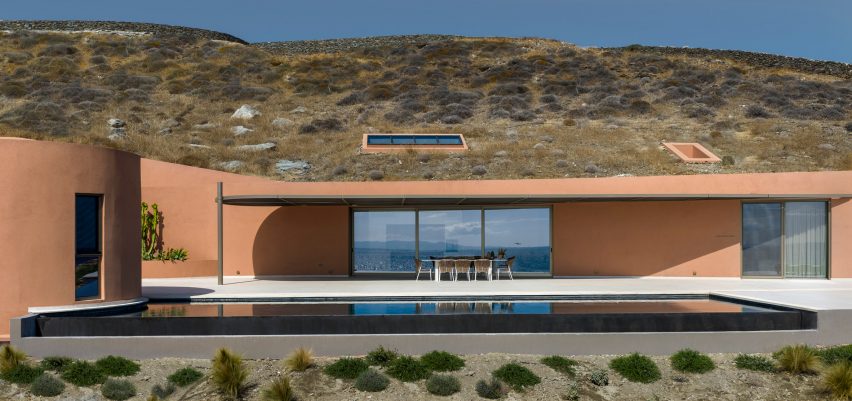
The Plane, with skylights in the hillside above the rooms. Photo: Yiorgis Yerolymbos, via Dezeen
Pale inside, earth outside. Outside, the walls are a textured, earth-coloured render. Inside, warm off-white walls keep the underground rooms bright, and light stone floors run from the terraces into the rooms and stay cool underfoot in summer. The suites are 35 to 55 m², each with a sea-view terrace; most share a pool with one neighbouring suite, and one has a pool of its own.
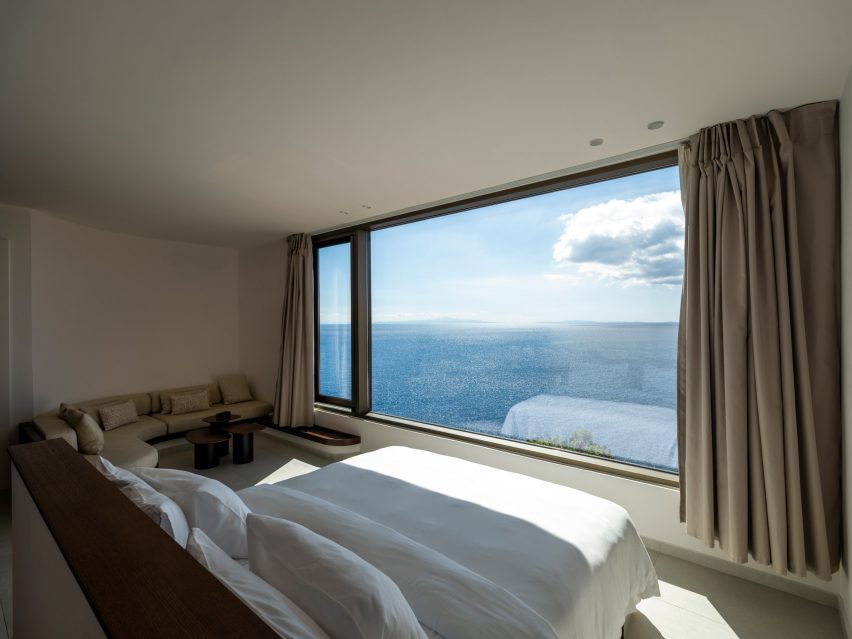
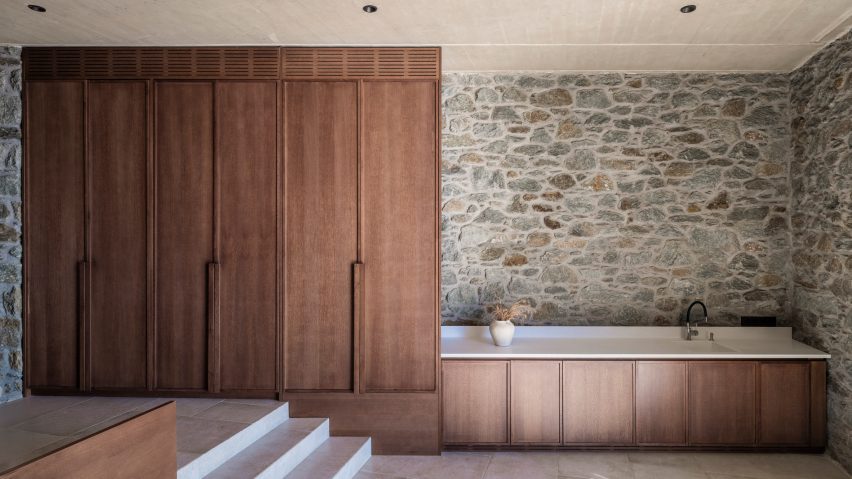
A bedroom facing the sea, and a stone wall left showing inside. Photos: Yiorgis Yerolymbos, via Dezeen
Rooms that can be one or two. The two suites of The Line can be let on their own or joined into one larger unit, sharing the terrace and its infinity pool. The same rooms sell to a couple one week and a family the next.
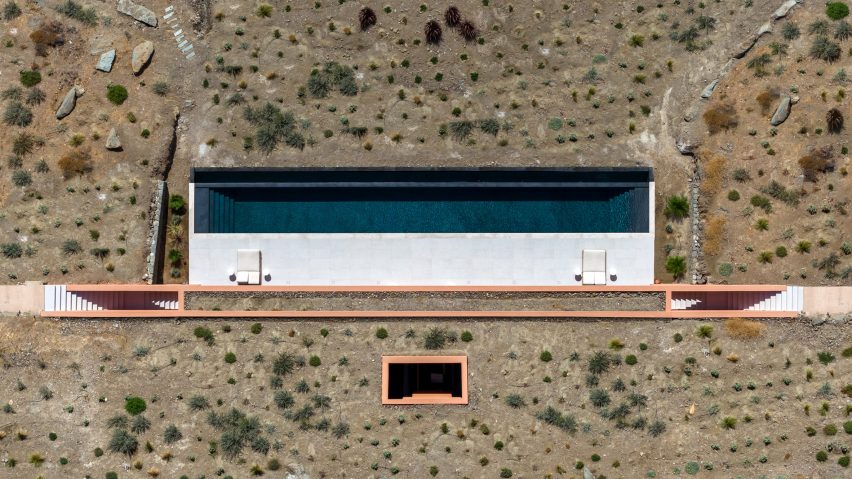
The Line from above: the shared terrace and its long pool. Photo: Yiorgis Yerolymbos, via Dezeen
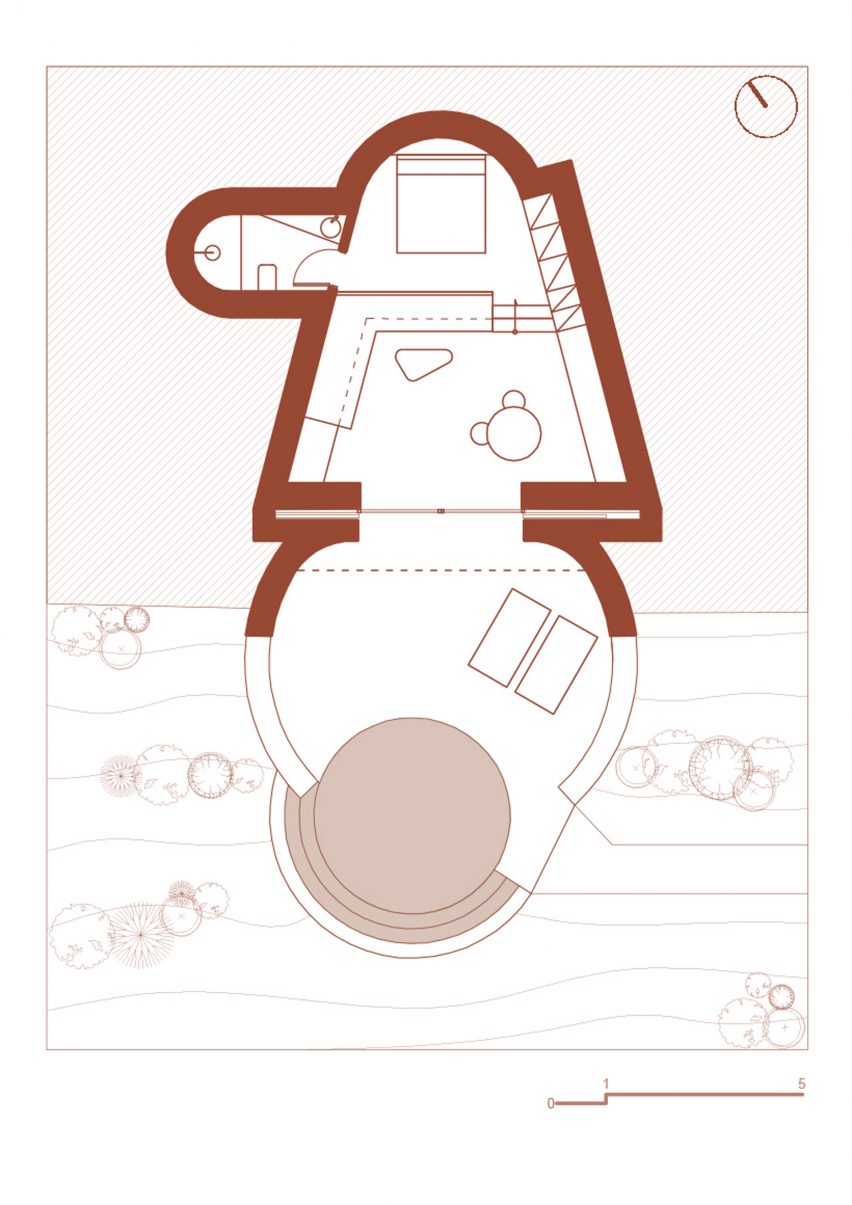
Plan of The Point, the guest house at the bottom: the rooms dug in behind thick walls, and the curved wall wrapping a terrace and its round pool. Drawing via Dezeen
What hosts can take from it: if your land slopes, use the slope. Rooms stepped into a hillside, each with its own terrace, give every guest the view and their privacy without a tall building on the skyline. And if two of your rooms can open into one, you can sell them both ways.
Izumo Hotel The Cliff, Japan: eight rooms inside a sea cliff

Photo: Izumo Hotel The Cliff, via the MICHELIN Guide
On the Shimane coast in western Japan, this hotel stands not on top of a cliff but inside one. Its eight rooms are cut into the cliffside like bunkers, and each looks out to sea from its own deep, private balcony set back into the rock. Inside it's raw concrete and fine woodwork. The restaurant sits on the terrace above the rooms, where the view opens up along the coast, and serves seasonal local food. The hotel is in the MICHELIN Guide's hotel selection, and rooms for December were on sale when we checked.
Why the design works
From above, you barely see it. The rooms are rounded concrete shells set low into the grass and sand of the cliff edge. From the clifftop they look like part of the dune; only the curved openings turn to the sea.

The rooms' concrete shells in the cliff edge. Photo: Izumo Hotel The Cliff, via the MICHELIN Guide
The opening is the view. Because each balcony is recessed into the rock, the sea is framed like a picture, and the neighbours are out of sight. Nothing on the balcony needs a screen or a fence to be private: the depth does it.
Rooms below, life above. Putting the one shared room, the restaurant, on the terrace above the bedrooms gives it the widest view, and keeps the comings and goings of dinner away from where guests sleep.


A room looking out through its recessed balcony, and the restaurant with its view along the coast. Photos: Izumo Hotel The Cliff, via the MICHELIN Guide
What hosts can take from it: a deep, set-back balcony does two jobs at once. Neighbours can't see in, the sun can't bake the room, and the opening frames one view like a picture.
See Izumo Hotel The Cliff on the MICHELIN Guide
Argos in Cappadocia, Türkiye: a village of caves around an old monastery
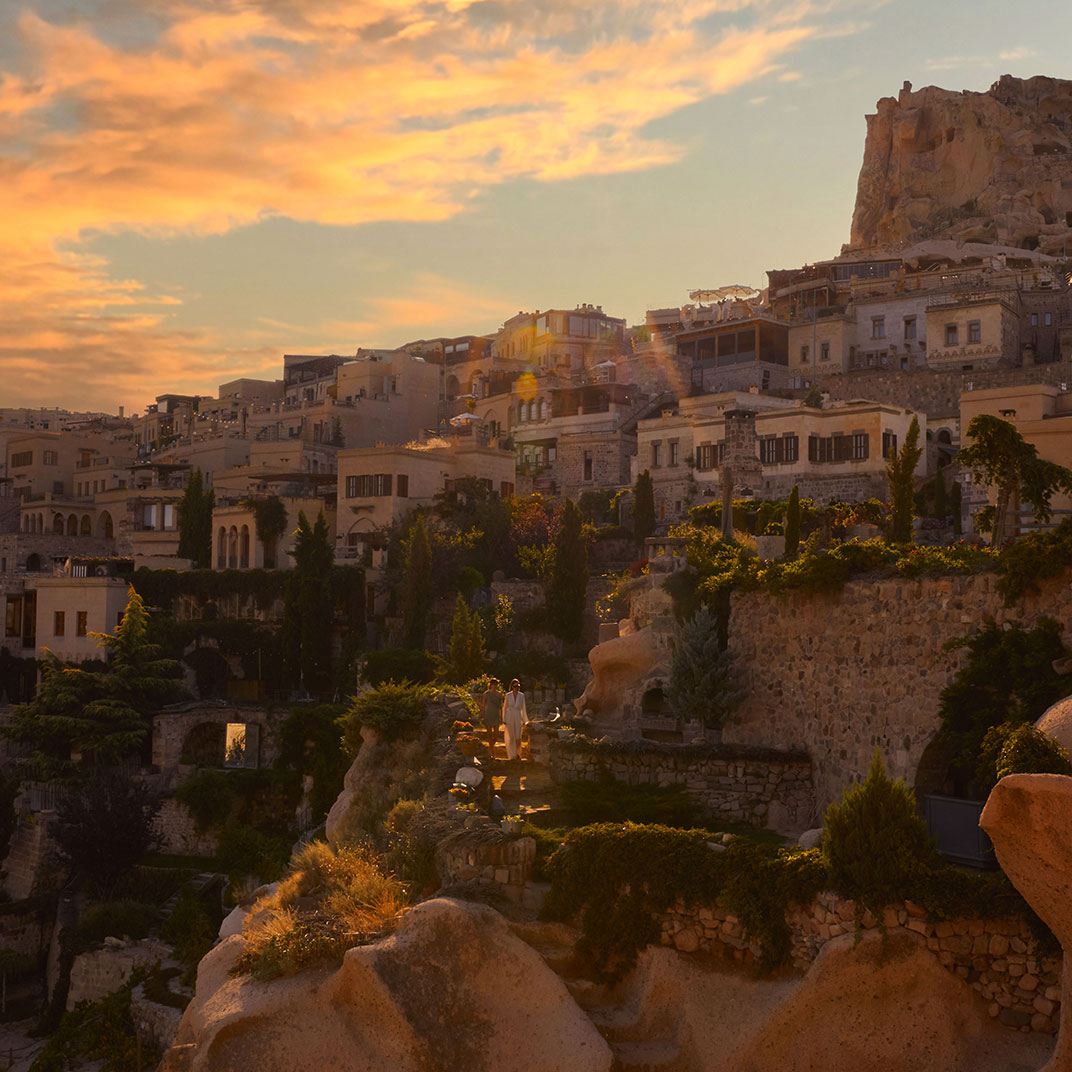
Photo: Argos in Cappadocia, via the MICHELIN Guide
In the village of Uçhisar, in Cappadocia, Argos is a former monastery turned into a hotel of 71 rooms that spreads down the hillside like a small village, above the Pigeon Valley. Inside it's arches, vaults and big rough-cut stone blocks; outside, weathered stone houses tumble down the slope. Some rooms have terraces, some have a pool inside the cave. During the restoration the owners found a large network of tunnels, and turned it into a restaurant, meeting rooms, a wine cellar and even a concert hall.
Why the design works
A village, not a block. Argos isn't one big building. It's a cluster of old houses, caves and passages that keeps the shape of the hillside, and the hotel's own history page calls it a "village-within-a-village", restored and preserved rather than rebuilt. Guests walk between their room, the restaurant and the pools the way people walked through the village.
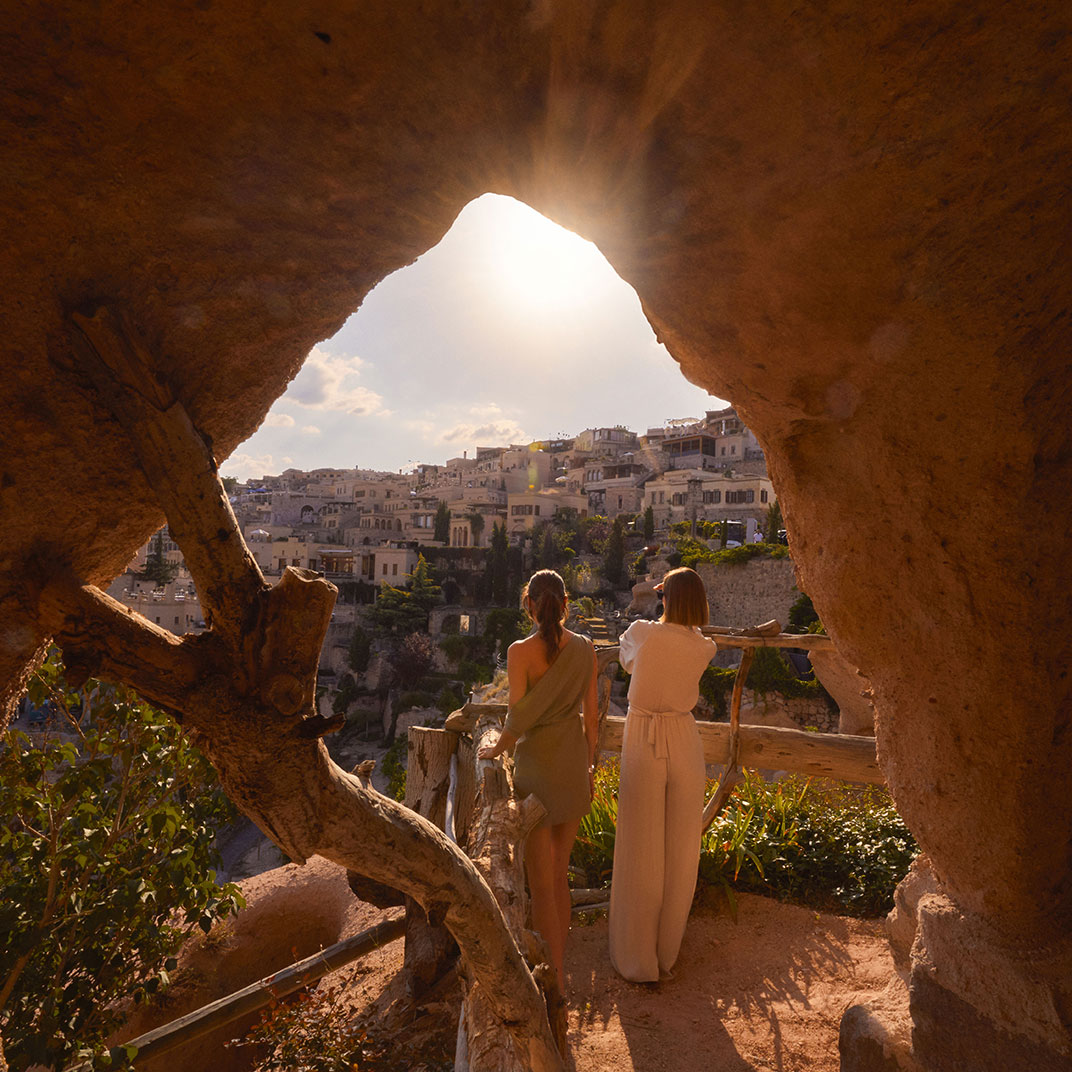
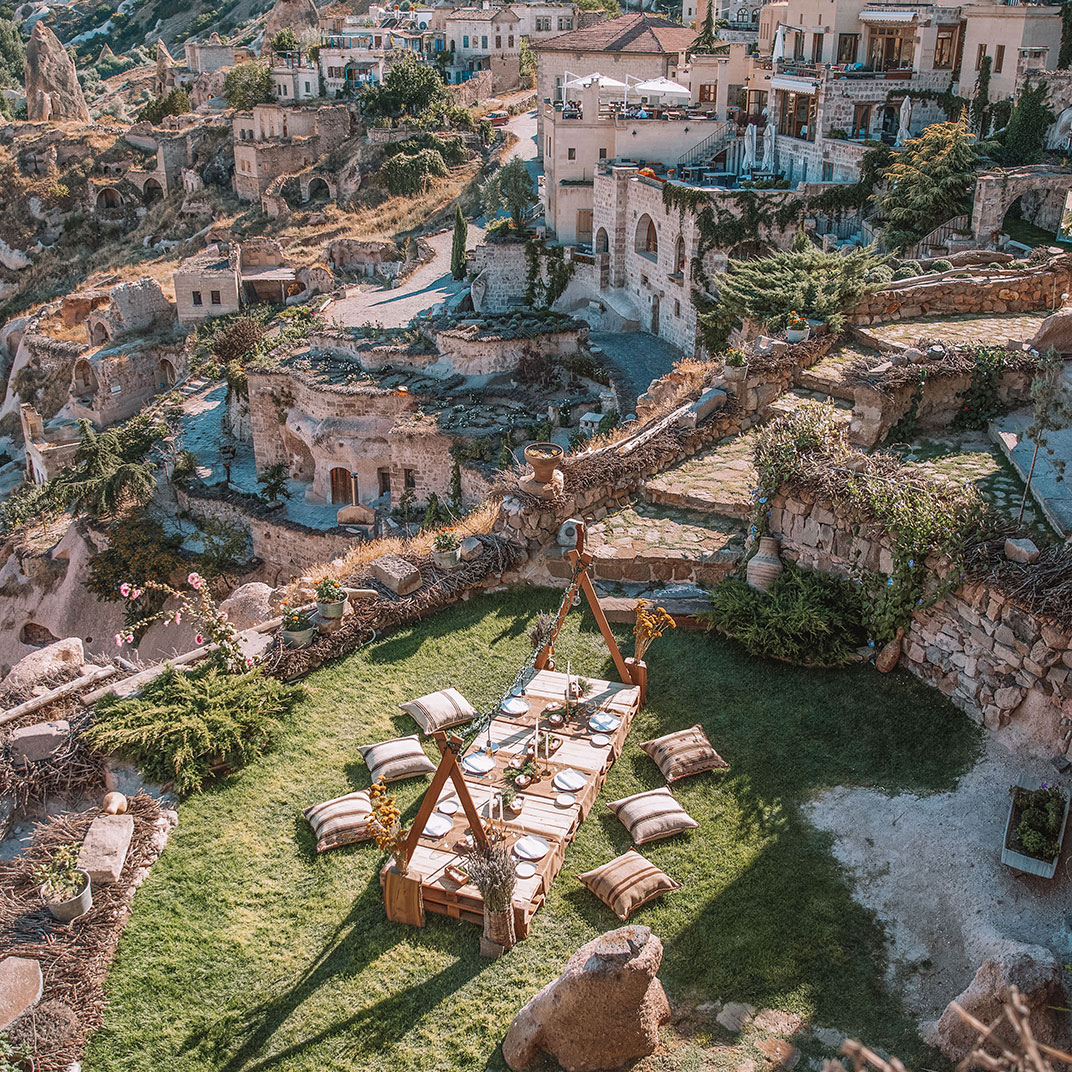
A rock arch over the village, and the hotel from the air. Photos: Argos in Cappadocia, via the MICHELIN Guide
Old spaces, new jobs. The hotel says its caves, old monasteries, a chapel, a caravanserai, a mill house and the underground tunnels were all kept and given new uses. Rooms keep their stone vaults and rock walls; the comfort comes from what's put inside them.
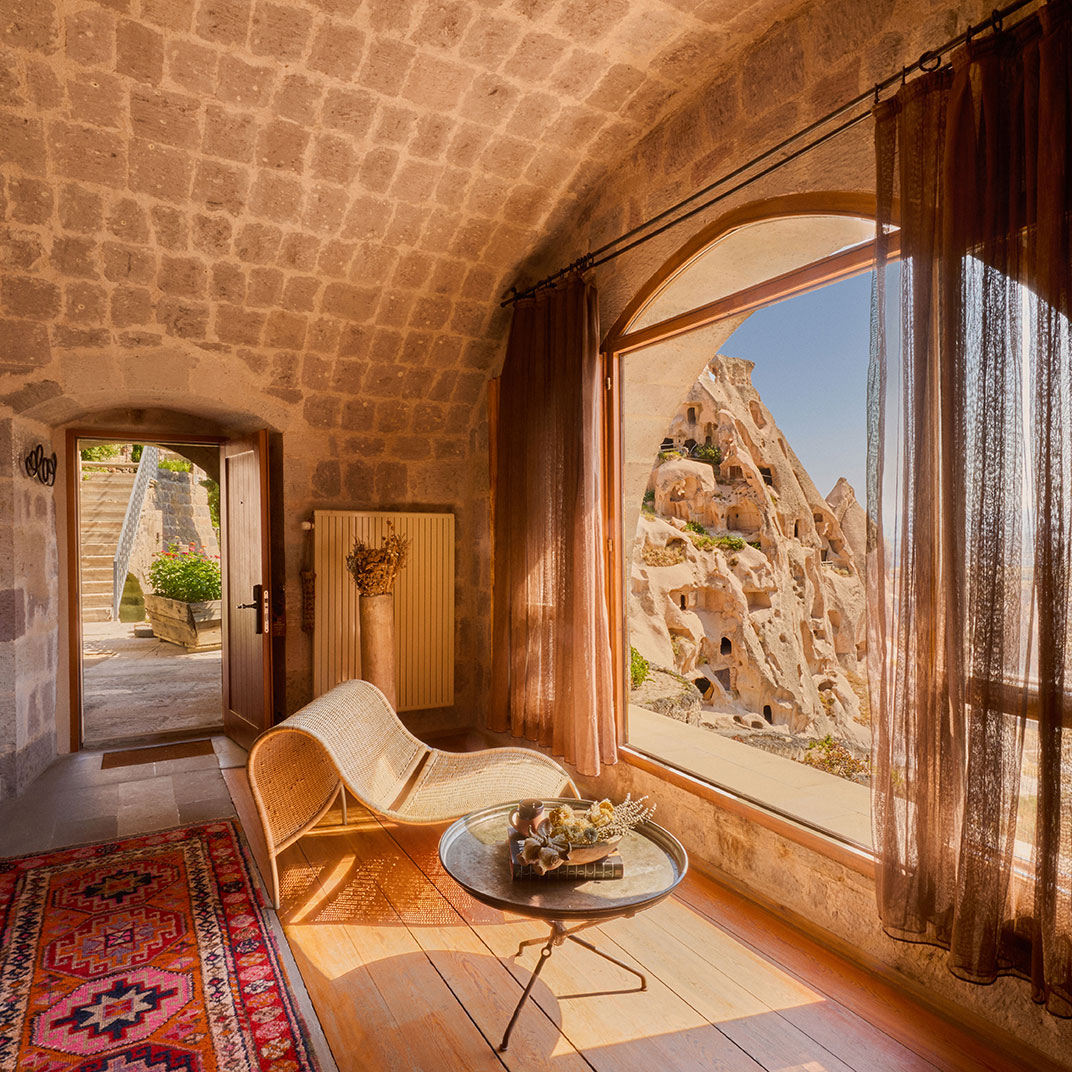
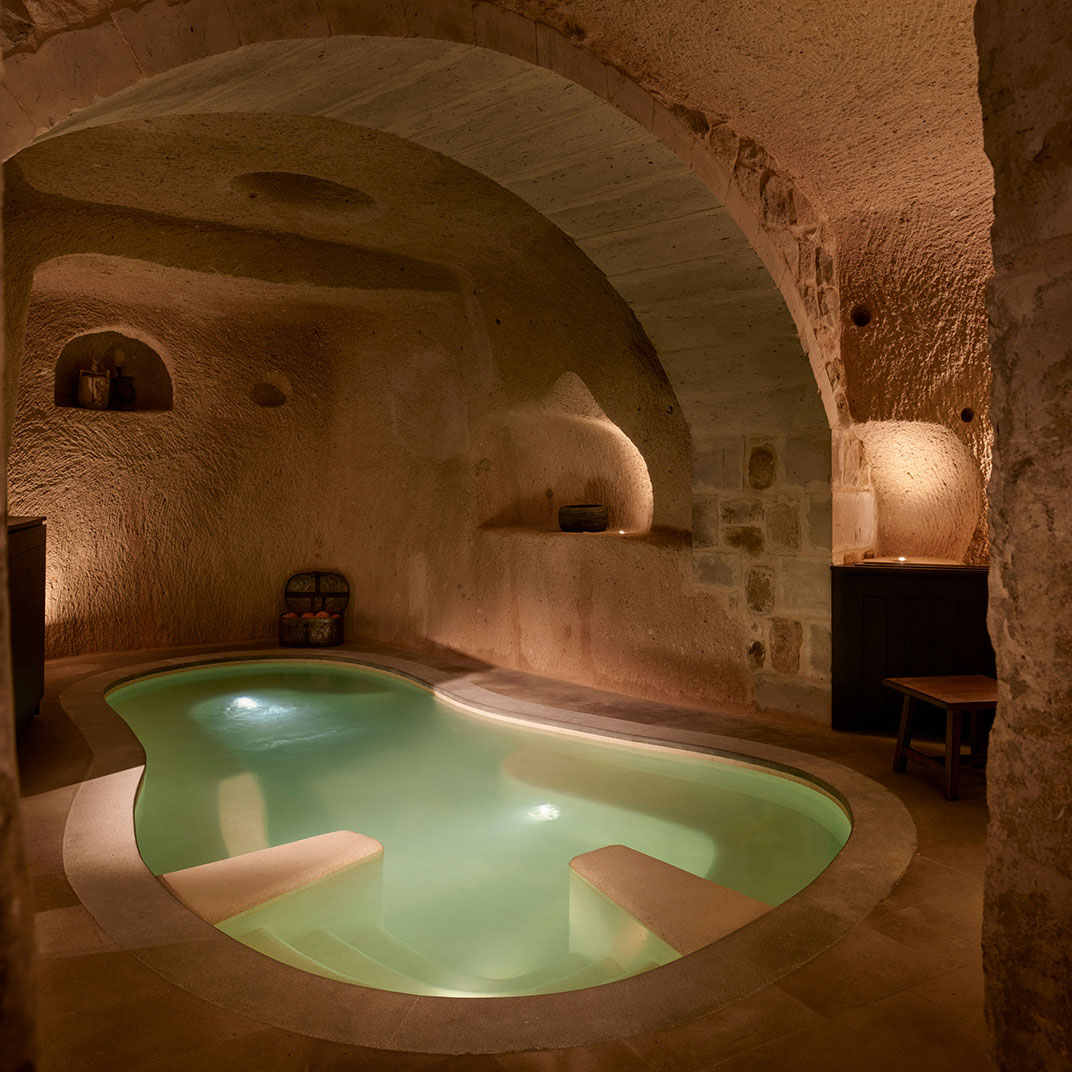
A vaulted room facing the rock, and a pool inside a cave suite. Photos: Argos in Cappadocia, via the MICHELIN Guide
The tunnels became the best rooms. What could have been a problem found during building work, a network of tunnels under the hill, is now where guests eat, drink and listen to music.
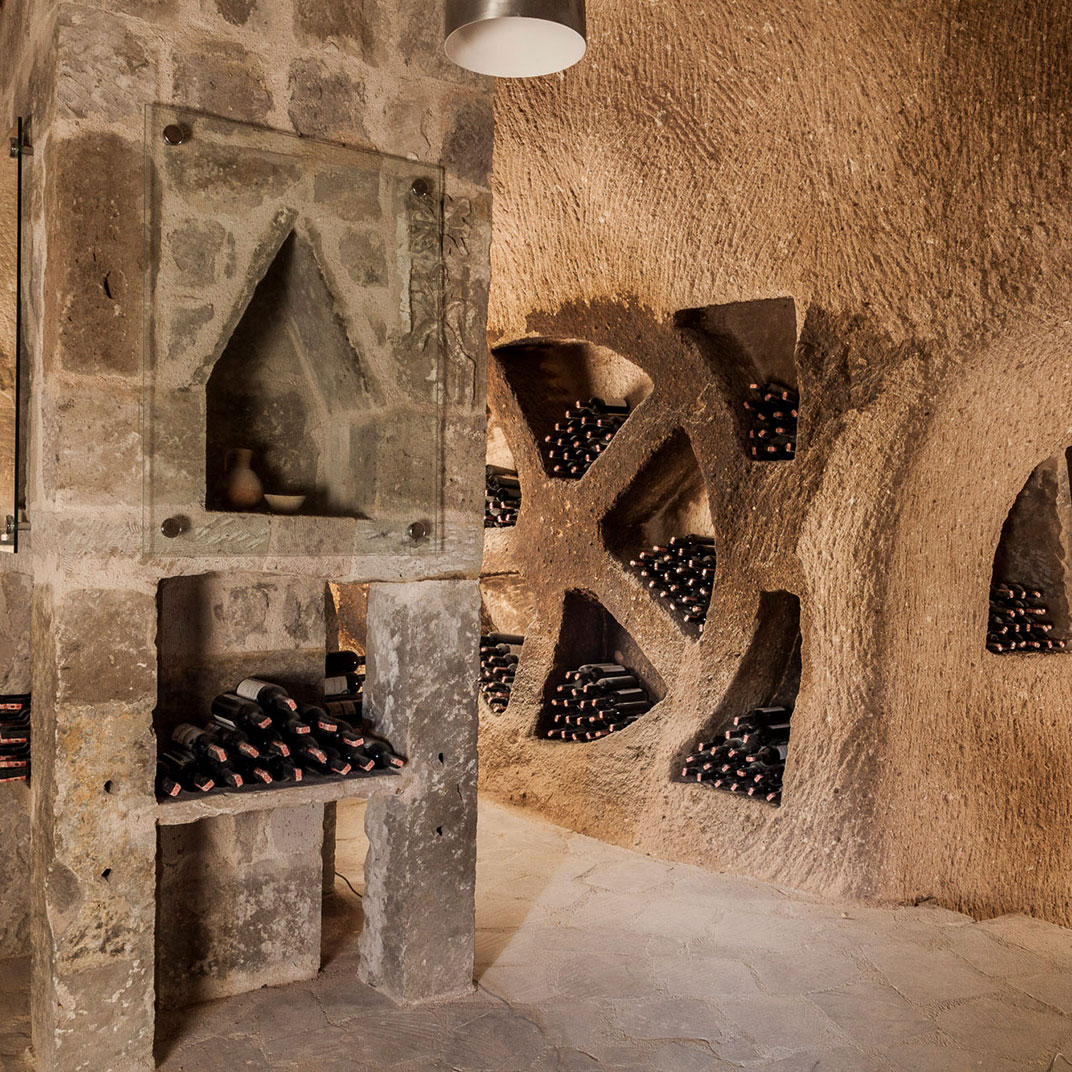
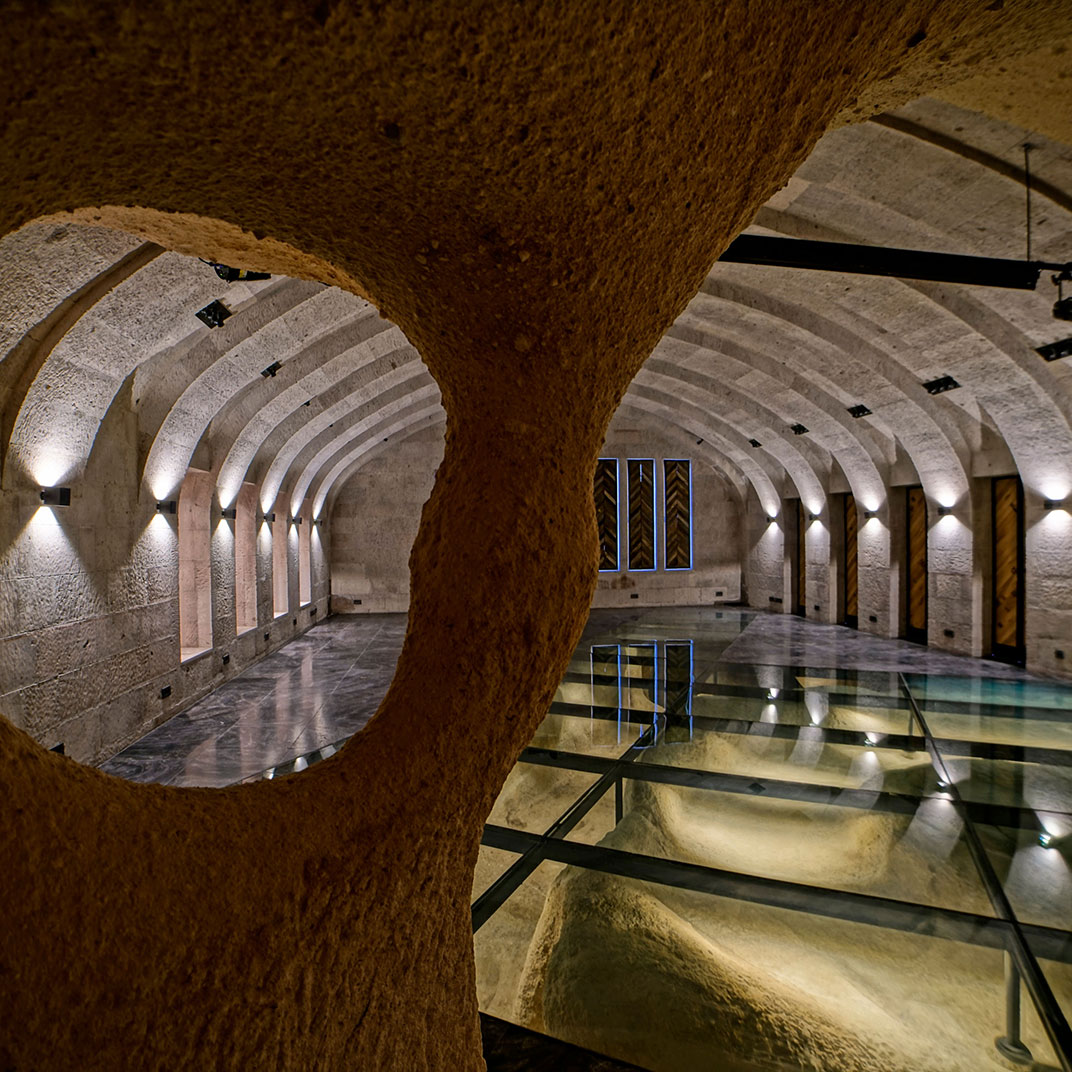
Wine racks cut into the rock, and a vaulted hall underground. Photos: Argos in Cappadocia, via the MICHELIN Guide
What hosts can take from it: the awkward space can become the best room. A cellar, a vaulted barn or an old stable can be your dining room or wine cellar, and the room guests photograph first.
See Argos in Cappadocia on the MICHELIN Guide
Sextantio Le Grotte della Civita, Matera, Italy: a hotel spread through old cave houses
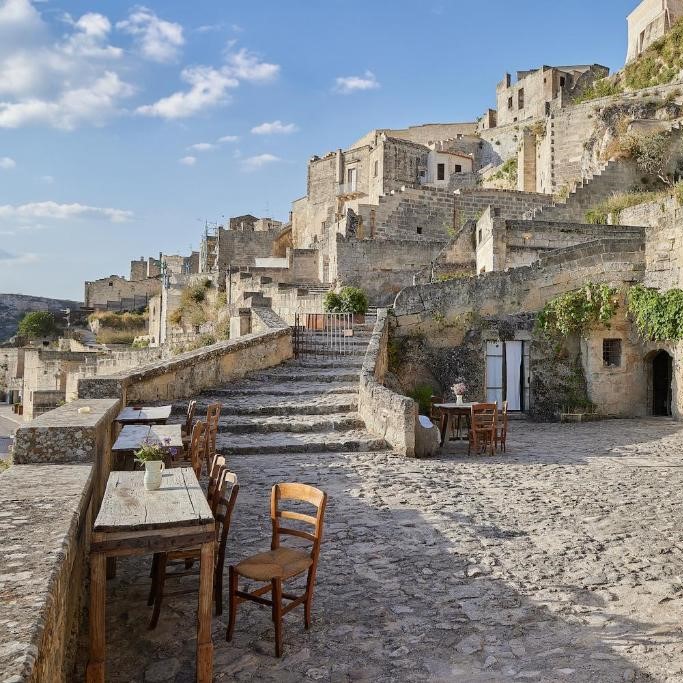
Photo: Sextantio Le Grotte della Civita, via the MICHELIN Guide
Matera, in southern Italy, is famous for homes cut into its hillsides, some going back to prehistoric times; its Sassi have been a UNESCO World Heritage site since 1993. Daniele Kihlgren didn't build a new hotel next to them. Sextantio puts its rooms in the caves themselves, in the Civita, the oldest part of the Sassi, on the cliff above the Gravina gorge. Italians call this an albergo diffuso, a "spread-out hotel": rooms in several old buildings, run as one hotel. There are 24 rooms: 18 caves, some of them very large, and six rooms in an 18th-century palazzo, with a shared room in an old rock church. It's about 60 km from Bari airport, and rooms for December were on sale when we checked.
Why the design works
Restore, don't redesign. Sextantio describes itself as a cultural project of conservative restoration. The caves keep their rough rock walls, vaults and old stone floors; what's added is plain wooden furniture, linen and candlelight. The building is the decoration.
One modern luxury, chosen well. The MICHELIN Guide puts it simply: the bathroom may be a bare rock cavern, but the bathtub is the finest money can buy. The comfort goes into the one thing guests touch most, not into covering up the rock.

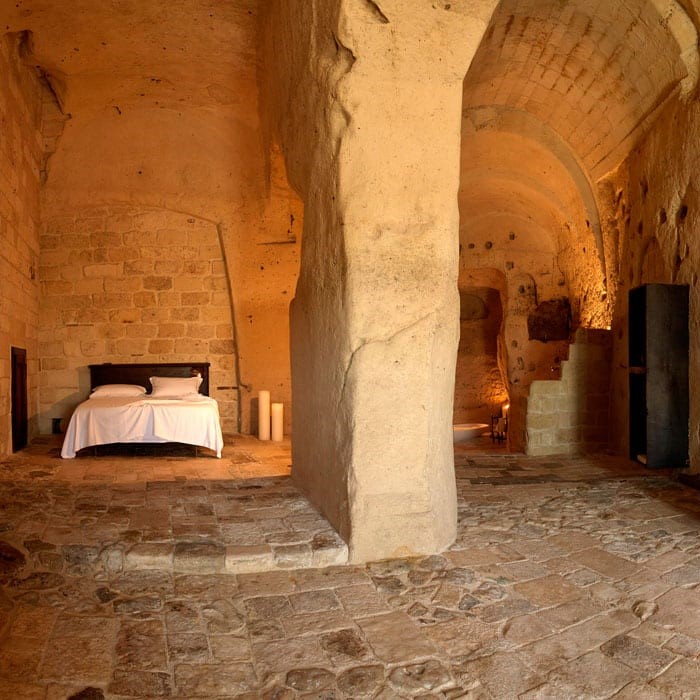
A bathtub in a bare rock cave, and a room arranged around a pillar of rock. Photos: Sextantio Le Grotte della Civita, via the MICHELIN Guide
The street is the corridor. With rooms spread through the old quarter, guests walk outside between their cave, the shared rooms and the view over the gorge to the Murgia park and its rock churches. The town is part of the stay.
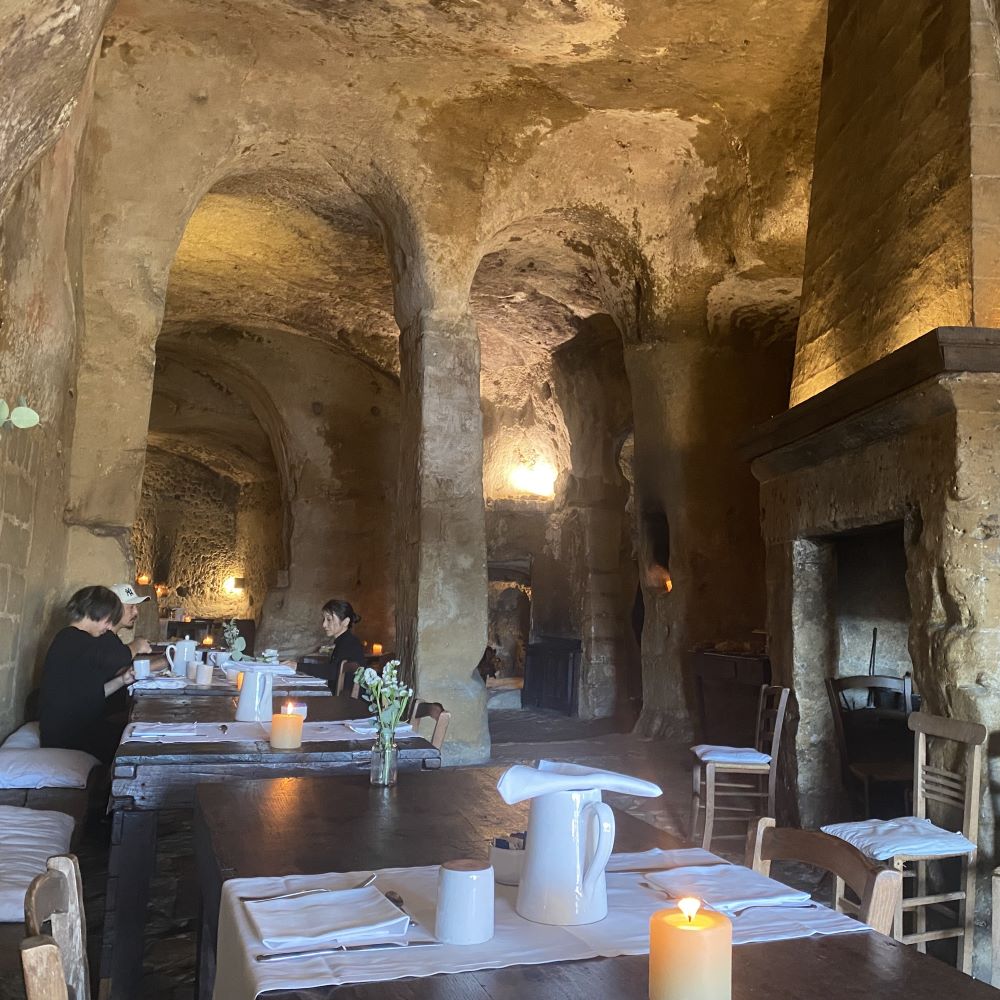
Tables in a dining room inside the caves. Photo: Sextantio Le Grotte della Civita, via the MICHELIN Guide
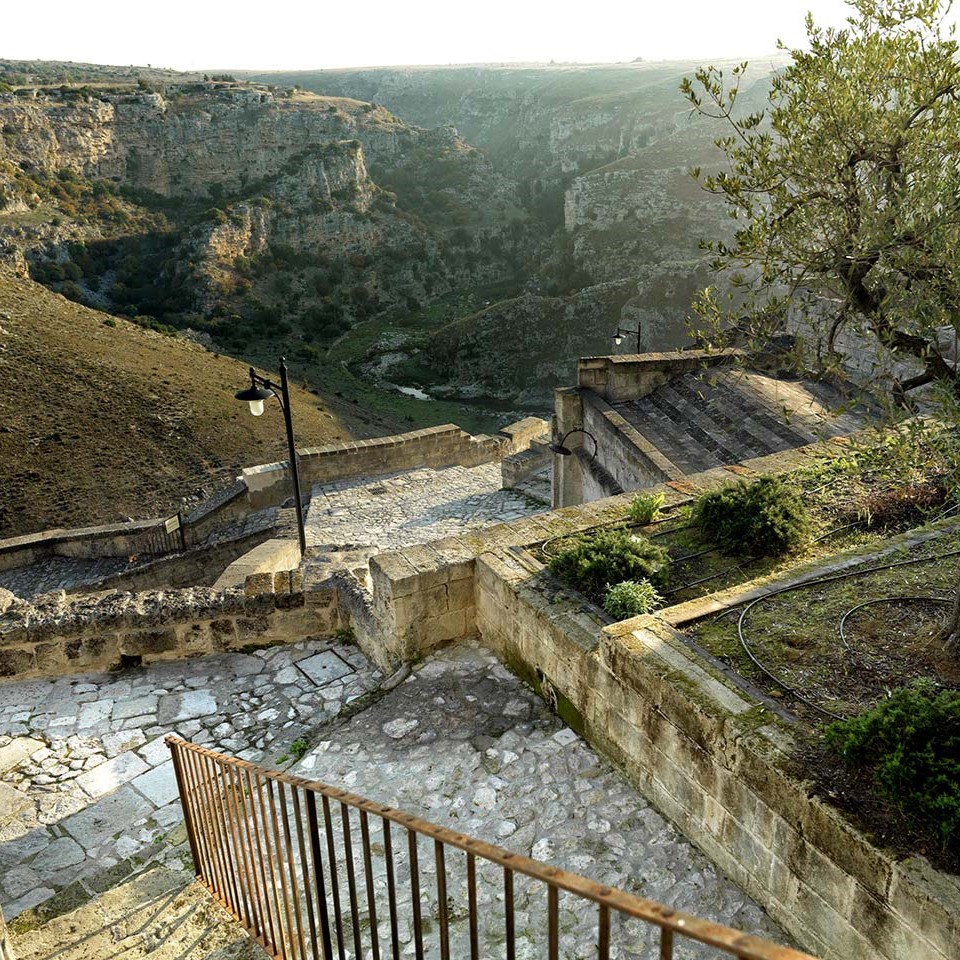
Looking out over the Gravina gorge. Photo: Sextantio Le Grotte della Civita, via the MICHELIN Guide
What hosts can take from it: you don't need one big building to run a hotel. Several restored rooms in old houses along one street, with one reception and one breakfast, can work as a single stay, and the village itself becomes part of what guests come for.
See Sextantio on the MICHELIN Guide
Wadi Rum Cave Camping, Jordan: a bed under a rock overhang
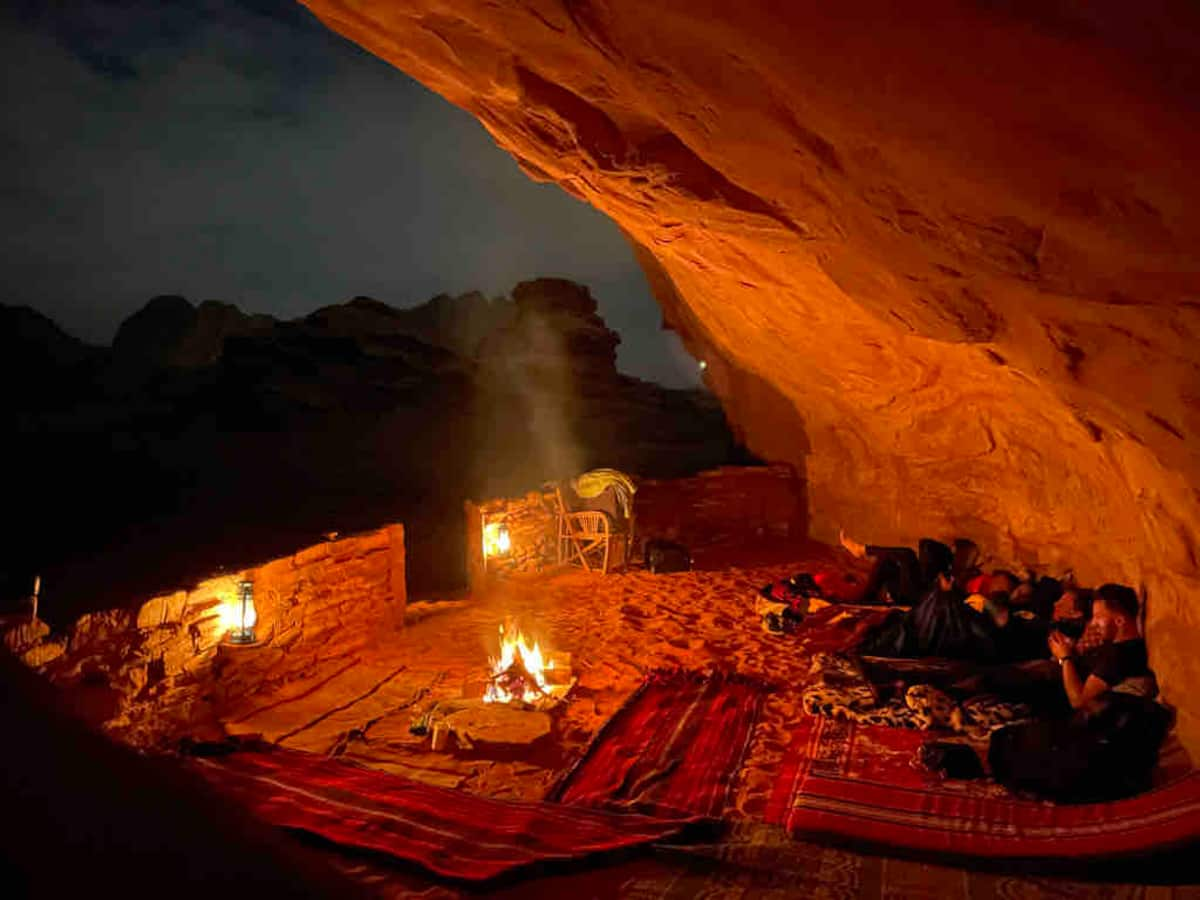
Photo: Wadi Rum Cave Camping, via Airbnb
Not every rock stay is built by architects. In Jordan's Wadi Rum desert, a Bedouin family hosts guests in a natural cave under a rock overhang, open to the sky, about 12 km into the desert from Wadi Rum village. You leave your car at the village entrance and go out by jeep. There are real beds (two singles and a king, with extra mattresses for groups), dinner around the fire, and a bathroom with hot showers two minutes' walk away. Guests were still staying there in October 2026.
The listing explains its price plainly. What you pay on Airbnb covers only the night. The jeep there and back, dinner, breakfast and a guide who stays nearby are a package: 80 Jordanian dinars for one guest, 45 per person for two to four, and 40 per person for bigger groups, with the Airbnb payment taken off.
What hosts can take from it: say up front what the price includes, how guests get there and what the bathroom is like. Better still, put the whole package into one price on the booking, so guests never pay anything on the side.
See Wadi Rum Cave Camping on Airbnb
The famous one that never opened
Many "hotel inside a cliff in Jordan" posts on social media show the Wadi Rum resort by Oppenheim Architecture + Design. In 2011 the Miami practice shared plans for 47 lodges carved into Wadi Rum's sandstone cliffs, due to open in 2014 (Dezeen). In 2015 Chad Oppenheim told The Architect's Newspaper that work had stopped after tribal groups wanted to renegotiate the land deal following the Arab Spring, and he couldn't give a new date. In 2019 Worth still called the project paused. The pictures are drawings: it isn't a place you can book.
The lesson for anyone building: land and permits come before drawings.
Armenia has its own carved village
Old Khndzoresk, near Goris in Syunik, is a village of homes cut into volcanic rock on the sides of a gorge. In the early 1900s it was the largest village in eastern Armenia, and people lived in its caves until 1958, when they moved to the new village above (Smithsonian). Today it's a place to visit, not to stay. Any building near a site like this needs the right permissions first.
What these places have in common
- The land leads. None of them fights its site: rooms follow the slope, the cliff or the cave that was already there.
- Keep what's there. Old vaults, rock walls, tunnels and stone floors stay on show. New work is plain, so the old work can be the decoration.
- Local colours. Earth-toned render, local stone, bare rock. The buildings look like part of the place.
- Light in deep rooms. Skylights, pale walls and pale floors keep rooms cut into rock from feeling like basements.
- Privacy by design. Stepped terraces, set-back balconies and small pools shared by two suites at most.
- Comfort where it counts. One very good bath, bed or shower matters more than a room full of fittings.
- Honest details. The best listings say how you get there, what's included and what the bathroom is like.
Sources
Read on 20 and 21 November 2026: Dezeen on Olen (25 February 2026) and Olen's page on Discover Greece; the MICHELIN Guide pages for Izumo Hotel The Cliff, Argos in Cappadocia and Sextantio, linked above; Argos's own Our story page and Sextantio's own page on the hotel; the Wadi Rum Cave Camping listing on Airbnb; Dezeen (2011), The Architect's Newspaper (2015) and Worth (2019) on the Wadi Rum resort; Smithsonian (2017) on Old Khndzoresk. Photos and drawings belong to each place and its architects and are credited under each one.
What it means for you
You don't need a cliff to use these ideas. Build the stay around one thing your land already has (a slope, an old stone wall, a cellar, a view), keep to local stone and earth colours, and say plainly what the price includes and how guests get there.
Written by the Revamp community team, from the sources linked in the text.